Procedures: ACL Reconstruction And Meniscal Repairs
Anterior Cruciate Ligament (ACL) reconstruction
%20tear.jpg?width=400&height=301&name=Anterior-cruciate-ligament%20(ACL)%20tear.jpg)
After an ACL rupture, patients are encouraged to undergo a rehabilitation programme aimed to reduce their knee swelling, control their pain, and maintain good movement of the knee and muscle strength. Though uncommon, there have been cases of people functioning well without an ACL, even performing normal daily activities such as walking and gentle jogging.
Problems may begin to arise when these activities are heightened, often twisting and torqueing the knee. This is when an ACL-deficient knee becomes unstable and painful. The instability may also cause your meniscus to tear and strain other ligaments around the knee. If the symptoms worsen despite adequate rest and medication, it is advisable to seek help from an orthopaedic surgeon.
Often, we receive young patients undergoing ACL reconstruction surgery, and only requiring general anaesthetic (GA) for their surgery. Once they are under GA, an arthroscopic (keyhole) assessment of their injured knee will be performed to determine the problems in the knee. It is common to find concurrent meniscal or cartilage injuries in the knee which can also be resolved during the surgery.
%20assessment.jpg?width=250&name=an%20arthroscopic%20(keyhole)%20assessment.jpg)
How is ACL reconstruction performed?
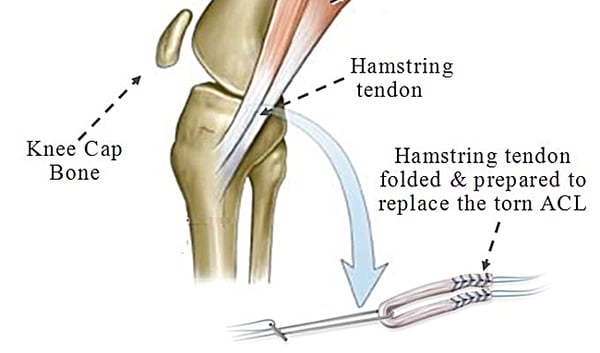
Part of the old ACL is shaven off using arthroscopic instruments, and the ACL will be reconstructed using the patient’s hamstring tendons. A small vertical incision is made to harvest their hamstrings from the same leg, which are folded to form a four-strand hamstring tendon graft. The hamstrings are then bound together with sutures to form a robust new ACL graft.
These techniques may work for some, but are associated with fractures of the patella and cause patella pain when patients kneel on the floor.
The ACL can also be reconstructed using two separate grafts through two separate bone tunnels through the tibia and femur each, but these carry a risk of fractures around the bone tunnels, causing the reconstruction to fail. Using an allograft (tissue from an organ donor) can also lead to a higher risk of rupture, especially in younger patients.
Ultimately, the use of hamstring tendons from the patient (autograft) and performing surgery through arthroscopic and minimally invasive techniques is a widely-adopted method, and a popular technique across the world.

What is the recovery like?
Phase 1
- To control pain and reduce the swelling in the knee
- Maintain the strength of your quadriceps tendon
- Early range of motion of the knee
Phase 2
- Improving the movement of your knee (extension and flexion)
- Removal of sutures
- Gait training and muscle strengthening
- Return to work
Phase 3
- To achieve a full range of motion of your knee
- Good strength in the operated knee, similar to the non-operated knee
What is ACL surgery, and what does ACL stand for?
ACL stands for the anterior cruciate ligament, one of two cruciate ligaments in each knee. It sits in the middle of the knee, connecting the femur and tibia, and provides stability when we twist and pivot during daily activities and sports.
ACL surgery, more precisely called ACL reconstruction, is a procedure to replace a torn anterior cruciate ligament with a graft. The ACL is a very strong structure, but it can rupture when excessive force is applied, typically in sports involving sudden stops or changes of direction such as football, basketball, or skiing. Because a complete ACL rupture does not heal on its own, reconstruction restores the structure and function of the ligament.
How long does ACL surgery take?
ACL reconstruction surgery itself typically takes about one to two hours, though the exact duration depends on the complexity of the injury and whether any additional damage, such as a meniscus tear, is being repaired at the same time.
It is worth distinguishing between two things patients often ask about:
- Operating time: approximately 1 to 2 hours in theatre
- Total time in hospital: usually a day-surgery or single overnight stay, including preparation and recovery
If a meniscus repair is performed alongside the ACL reconstruction, the operation generally takes somewhat longer.
Do I always need surgery for an ACL tear?
Not always. After the initial pain and swelling subside, many patients can still walk and do some exercise even without an intact ACL. Whether surgery is needed depends on your knee stability and your lifestyle:
- Non-surgical management may suit: those who mainly do straight-line sports such as brisk walking, gentle jogging, cycling, and swimming, or who have only a partial ACL rupture
- ACL reconstruction is strongly encouraged for: those who take part in lots of pivoting sports such as football or basketball, where an intact ACL is crucial for balance and performance
An unstable, ACL-deficient knee has a significant risk of subsequent meniscus tears and cartilage degeneration due to the micro-instability that occurs. If symptoms worsen despite rest and medication, it is advisable to seek help from an orthopaedic surgeon.
How is ACL reconstruction surgery performed?
ACL reconstruction is performed arthroscopically (keyhole surgery), using small incisions, a camera, and specialised instruments. The main steps are:
- Graft harvest: a tendon graft is taken, usually from the hamstring, patellar tendon, or quadriceps tendon, or occasionally from a donor
- Removing the torn ligament: the remnants of the damaged ACL are cleared
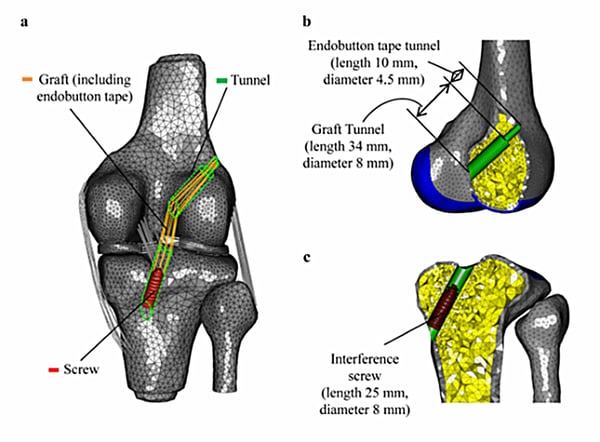
- Creating tunnels: precise tunnels are drilled in the thigh and shin bones to position the new ligament
- Fixing the graft: the graft is threaded through the tunnels and secured with small implants, recreating a stable ACL
Because the approach is minimally invasive, patients typically experience less scarring and a quicker early recovery than with open surgery.
How long does it take to recover from ACL surgery?
While the operation takes only a couple of hours, full recovery from ACL reconstruction is a gradual process measured in months:
- First 2 weeks: wound healing, swelling control, and early gentle movement with crutches
- 6 weeks: most patients walk comfortably and resume light daily activities
- 3 to 4 months: progressive strengthening and return to jogging in many cases
- 9 to 12 months: return to pivoting sports such as football, basketball, and netball, once strength and stability targets are met
A structured, supervised physiotherapy programme is essential. Maintaining the strength of your quadriceps muscles and the flexibility of your knee is crucial, and rushing back to sport too early significantly increases the risk of re-injury.
How much does ACL surgery cost in Singapore?
The cost of ACL reconstruction in Singapore varies with the hospital setting, graft choice, and whether additional procedures such as a meniscus repair are performed:
- Public hospital (subsidised): lower cost, with longer waiting times
- Private hospital: a higher all-inclusive fee covering surgeon, anaesthetist, implants, operating theatre and hospital fees.
A combined ACL and meniscus procedure will cost more than an ACL reconstruction alone due to the use of sutures for the meniscus repair. Orthopaedic procedures performed by Dr Mizan are covered by both private and corporate insurance. Request an itemised quotation from the clinic and confirm your coverage with your insurer beforehand.
What happens if an ACL rupture is left untreated?
Some people can function well day to day without an ACL, but problems often arise when activities are heightened, particularly those involving twisting and torqueing of the knee. This is when an ACL-deficient knee becomes unstable and painful.
The instability may also cause your meniscus to tear and strain other ligaments around the knee. Over the medium to long term, an unstable knee after an ACL rupture may lead to meniscal tears and arthritis. For this reason, if symptoms worsen despite adequate rest and medication, it is advisable to seek assessment from an orthopaedic surgeon.